

I stood on a surfboard for the first time back in 2015. After that, I’d occasionally borrow a soft-top board whenever we traveled somewhere that had surf. Somehow, the sport got under my skin. But living in Germany and going on vacation only once or twice a year didn’t exactly provide the foundation to take surfing seriously.
When we spent an extended period of time in Bali in 2023, I finally decided to put real time and energy into it. In early 2024, I ordered my first longboard—borrowing boards had always held me back because I was constantly scared I’d damage someone else’s board. And by the end of February, my surf journey officially began.
There’s never been a sport that has consumed me the way surfing has. Even after two years of learning, there’s still so much to improve—I’m nowhere near “pro.” No sport is as humbling and, at the same time, as rewarding as surfing. And honestly, it’s more than a sport. I’d call it a lifestyle—and in some ways even a therapist and a life coach.
That’s exactly why I’m writing this. I may have learned these things through surfing, but you can carry them into so many other areas of life. So even if you’ve never touched a surfboard, you might still see yourself in these lessons.

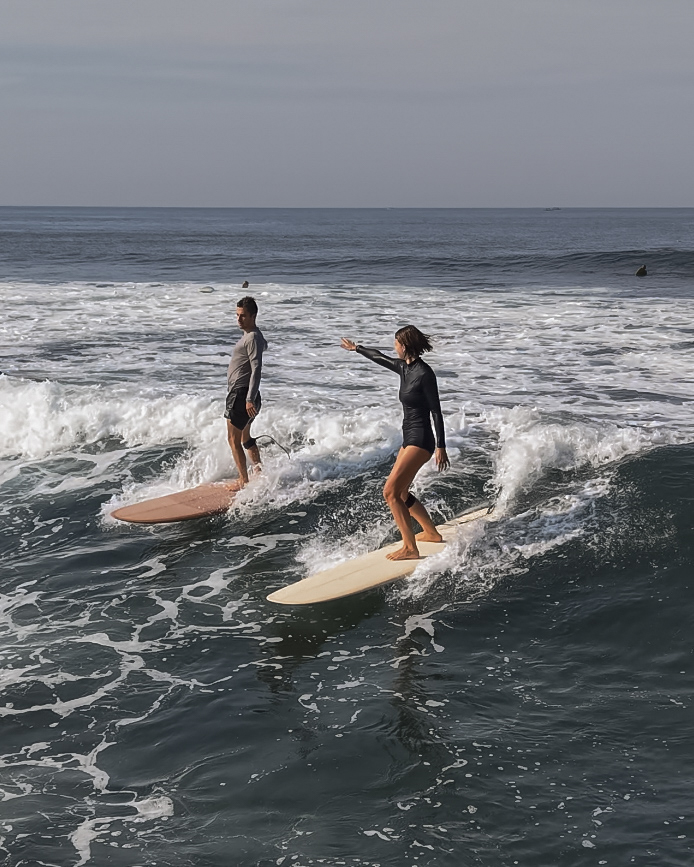
Why Surfing Is More Than Just a Sport
You’ve probably heard people say surfing is a lifestyle. And if you’ve ever visited a surf town, you’ll know what they mean. Wherever surfing is a big thing, there’s a very specific vibe and rhythm to life. That feeling doesn’t come out of nowhere. And if you can already sense it as a non-surfer, you can probably imagine how it feels once you’re part of it.
Surfing challenges you physically and mentally. It creates a deeper awareness of nature and the environment, simply because you’re so close to it out there in the water. Waiting for waves requires patience—but it also brings a kind of calm and peace that’s honestly hard to find in everyday life. In a way, it can feel meditative.
And then there’s the focus. Surfing demands 100% of your attention. There are so many things to pay attention to—positioning, timing, other surfers, the ocean, your own body—that you don’t really have space in your head for anything else. For that moment in the water, the to-do list disappears. Problems get quiet. Stress drops. Your mind actually gets a break.
Where else do you get that in the same way? I genuinely can’t think of anything.
There are plenty more reasons why surfing is so much more than “just a sport,” but those are the big ones for me—and they’re what lead into the real topic: what two years of learning to surf have taught me.
What Surfing Teaches You
Over the past two years, surfing has taught me a lot not only about surfing itself, but about myself and about life. The list could go on forever, but here’s a small selection of the lessons that really stuck.
Patience
I’ve never been one thing: patient. I hate waiting. It always makes me feel like I’m wasting my life.
Surfing changed that very quickly—because the truth is, most of a surf session is exactly that: waiting.
And what surprised me most is that it came more naturally than expected. At some point, I realized that even during longer waits, I was still completely calm. Time in the water feels different—almost like it slows down, or runs on another rhythm entirely. And it’s simply beautiful to sit out there on your board, surrounded by the ocean.
In Bali, turtles sometimes pop up right next to you. In Portugal and France, dolphins came incredibly close. When you experience things like that, waiting doesn’t feel like wasting time at all.
It’s Never Too Late to Start Something New
Would I have loved to start surfing earlier? Absolutely. Because let’s be honest—it’s not that easy to start something new later in life. The challenge feels different. The risk feels bigger. And your mind has a talent for getting in your own way.
But anyone who dares to do it anyway won’t regret it. No matter what it is.
I learned that through surfing and in other moments in life. If you don’t try, you’ll never know if it could have worked. During my apprenticeship, my boss used to say: “You already have the no. You might get a yes.” And that mindset has stayed with me—try first, decide later.
You Don’t Have to Be Good at Something to Enjoy It
You might think that after two years of surfing, I should be really good by now. Let me tell you: I’m not.
Sure, I’m not a total beginner anymore—but for every thing I can do, there’s another thing I can’t (yet).
Surfing taught me patience, how to deal with setbacks, and to use more positive self-talk. But my focus isn’t 100% on progress anymore. It’s also—maybe even mostly—about having fun.
And you know what? I do. I genuinely have fun out there.
I’ve learned to focus on the small things: the fact that I get to be in the water in Bali with my own board. That a turtle might suddenly show up next to me. That even on big, tough surf days, I still manage to catch at least one wave.
I’ve learned that I don’t have to be good at something to enjoy it. At the end of the day, you decide whether you’re having fun or not—through your mindset.
Negative Self-Talk Doesn’t Get You Anywhere
I have very high expectations of myself. I demand a lot from myself, and I’m usually the person putting the most pressure on me. Surfing was no exception.
I wanted to be good from the beginning. I struggled with the fact that surfing can take a long time (and still does) before it “clicks.” I got angry at myself when I felt scared. I got angry when I made the same mistake over and over again. And as a result, I started talking to myself in a really negative way—sometimes it even ended in panic attacks.
One thing I had to learn quickly: negative self-talk helps with absolutely nothing. If anything, it pulls you down and creates setbacks instead of progress.
I noticed it myself, and I also got feedback from my surf instructor and the people around me. I still can’t fully shut off that negative voice 100% of the time—but I recognize it faster now. And when I do, I switch into more positive, supportive, motivating self-talk.
And I felt the difference immediately. When I speak to myself with encouragement instead of criticism, I can do more. I improve faster. I actually move forward. It’s not the only thing that matters, of course—but compared to negativity, it’s the difference between sinking and staying afloat.
And honestly, this is relevant in so many situations in life.
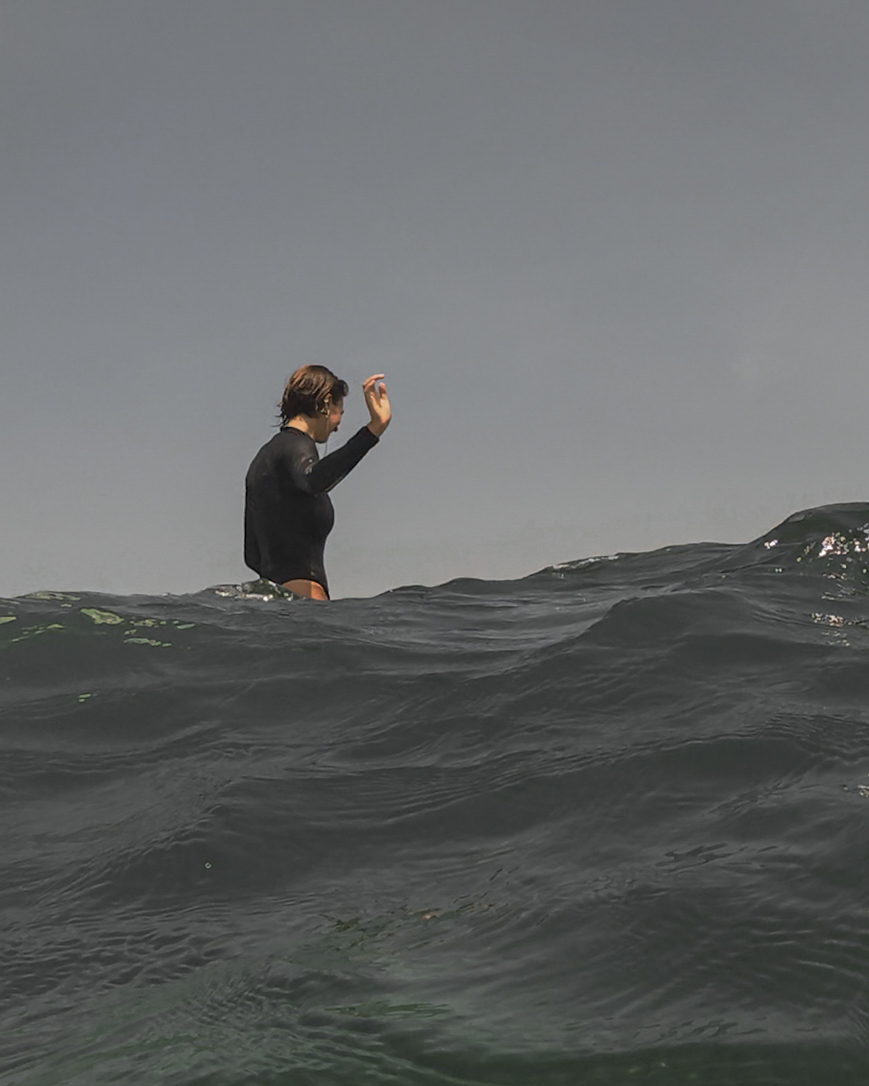

Learning to Deal With Setbacks
The learning curve in surfing is anything but linear. You make progress, feel like you’re getting better, and think, “Okay, now I get it.” And then out of nowhere, you have a surf session that brings you right back down to earth.
Learning to surf is a constant up-and-down. Setbacks are part of it.
And yes—it’s hard. Especially because setbacks often occur when you are just feeling confident. At first, that made me doubt myself a lot. But luckily, I’m also very stubborn, and I rarely quit. If I want something, I’ll see it through. And that attitude has carried me through a lot—including the messy, frustrating parts.
Over time, I learned: after every setback, things move forward again. If you stay patient and keep going, you don’t just get back to where you were—you often come back stronger. It’s basically two steps forward, one step back… and then two steps forward again.
I’ve learned to accept setbacks without letting them discourage me. I let the feelings happen. I let them out. But I don’t get lost in them. I acknowledge them, look ahead, and keep going.